
The M3 Pro: A Rare Misstep in Apple Silicon’s Performance Arc
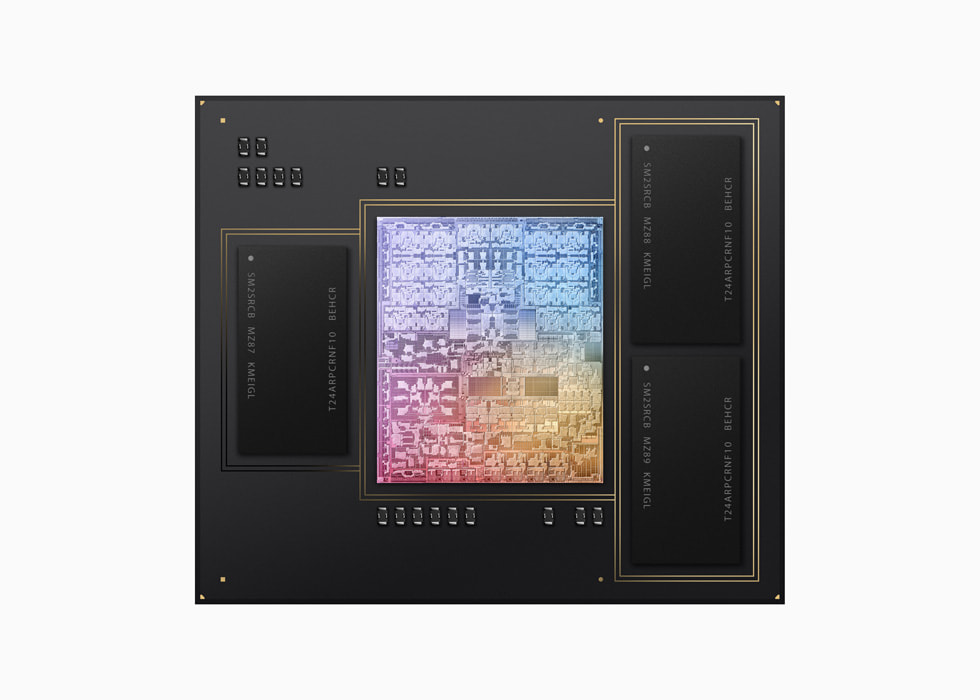
Apple’s M3 Pro via Apple
TL;DR –The M3 had some solid generational improvements like hardware ray tracing but in terms of multi-core CPU and GPU, the M3 Pro variant’s overall performance is too similar to the previous M2 Pro. Jump down to the “The Bad & Ugly” section.
The Apple M3 system-on-chip (SoC) family represents a significant evolution over its predecessor, the M2, with key architectural and fabrication advancements. One of the most prominent changes is the transition to TSMC’s 3nm manufacturing process, a notable shrink from the 5nm node used in the M2.
The Good
This advancement allows the M3 to deliver better energy efficiency and performance per watt, contributing to longer battery life and cooler operation in devices like the MacBook Air and iMac. The 3nm process enables Apple to pack more transistors—25 billion versus the M2’s 20 billion—enhancing CPU and GPU throughput without a dramatic increase in power consumption or physical die size.
Another standout feature of the M3 is its hardware-accelerated ray tracing and mesh shading support in the GPU, marking the first time Apple Silicon integrates these capabilities. This brings Apple’s graphics performance more in line with desktop-class GPUs, enabling more realistic lighting, shadows, and reflections in 3D applications and games. The M3 GPU also introduces Dynamic Caching, which optimizes memory allocation in real time to improve efficiency.
Single Core Performance Across SOC Generations (Pro Variants Only)
than prev. gen.
than prev. gen.
than prev. gen.
than prev. gen.
View benchmark table
Server-rendered benchmark rows derived from this shortcode instance for visitors and search engines.
| Family | Variant | Single Core Performance |
|---|---|---|
| M1 | Pro | 2,369 |
| M2 | Pro | 2,664 |
| M3 | Pro | 3,100 |
| M4 | Pro | 3,786 |
| M5 | Pro | 4,299 |
Apple’s M-series chips have typically delivered strong generational improvements—but the M3 Pro breaks that pattern in surprising ways. In single-core performance, the M3 Pro achieves a Geekbench 6 score of 3,093, which is a respectable bump from the M2 Pro’s 2,689 (a ~14% gain).
The Bad & Ugly
Now that we’ve talked about the “Good” things about the M3 family, let’s start to cover some of downsides of the M3 Pro variants.
In terms of memory bandwidth, the M3 retains the same 100 GB/s bandwidth as the base M2, but the M3 Pro and M3 Max configurations see adjustments: the M3 Pro has a reduced 150 GB/s bandwidth compared to the M2 Pro’s 200 GB/s, while the M3 Max scales up to 400 GB/s—matching the peak bandwidth of the M2 Max.
However, the real bad & ugly begins when looking at Geekbench multi-core performance: the M3 Pro scores just 14,624, while the M2 Pro scores at 14,941. This almost regression is visualized in graph 2 below, where the M3 Pro’s multi-threaded barely surpasses the previous generation.
Multi Core Performance Across SOC Generations (Pro Variants Only)
than prev. gen.
than prev. gen.
than prev. gen.
than prev. gen.
View benchmark table
Server-rendered benchmark rows derived from this shortcode instance for visitors and search engines.
| Family | Variant | Multi Core Performance |
|---|---|---|
| M1 | Pro | 12,195 |
| M2 | Pro | 14,624 |
| M3 | Pro | 14,941 |
| M4 | Pro | 20,551 |
| M5 | Pro | 28,159 |
The story becomes more concerning on the GPU front. In Geekbench Metal benchmarks, the M3 Pro posts a score of 73,908, while the M2 Pro comes in significantly higher at 89,032. That’s a 17% drop in GPU compute performance from one generation to the next. Combined with the M3 Pro’s reduced GPU core count (14 vs. 19) and memory bandwidth downgrade (150 GB/s vs. 200 GB/s), it’s clear the chip was engineered with different priorities—likely thermals and efficiency—at the expense of raw power. As shown in Screenshot 3, even real-world synthetic tests reflect this compromise.
GPU Metal Performance Across SOC Generations (Pro Variants Only)
than prev. gen.
than prev. gen.
than prev. gen.
than prev. gen.
View benchmark table
Server-rendered benchmark rows derived from this shortcode instance for visitors and search engines.
| Family | Variant | GPU Metal Performance |
|---|---|---|
| M1 | Pro | 71,001 |
| M2 | Pro | 87,374 |
| M3 | Pro | 76,444 |
| M4 | Pro | 103,653 |
| M5 | Pro | 137,248 |
Across multiple configurations in our dataset, the M2 Pro matches or surpasses the M3 Pro in both GPU and multi-core tasks. The M3 Pro only edges out in single-core performance—but even there, the lead is narrow and situational. For a chip aimed at professionals, this kind of performance tradeoff is hard to justify—especially considering both chips launched at a similar MSRP of $1,999. Users expecting a true next-gen boost may find the M3 Pro a disappointing plateau rather than a progression.
Normalized Combined Geekbench Scores* Across SOC Generations (Highlighting Pro)
+25% faster
than prev. gen.
+13% faster
than prev. gen.
+45% faster
than prev. gen.
+26% faster
than prev. gen.
View benchmark table
Server-rendered benchmark rows derived from this shortcode instance for visitors and search engines.
| Family | Variant | Normalized Combined Geekbench Scores |
|---|---|---|
| M1 | Base | 15,271 |
| M1 | Pro | 24,290 |
| M1 | Max | 30,453 |
| M1 | Ultra | 42,741 |
| M2 | Base | 19,137 |
| M2 | Pro | 29,257 |
| M2 | Max | 36,593 |
| M2 | Ultra | 55,078 |
| M3 | Base | 21,625 |
| M3 | Pro | 28,513 |
| M3 | Max | 39,229 |
| M3 | Ultra | 60,296 |
| M4 | Base | 25,689 |
| M4 | Pro | 38,536 |
| M4 | Max | 56,834 |
| M5 | Base | 31,012 |
| M5 | Pro | 51,259 |
| M5 | Max | 71,585 |
| M5 | Ultra (Est.) | 85,205 |
| M6 | Base (Est.) | 38,499 |
Thankfully, the geniuses in Cupertino have rebounded with the M4 family. The new M4 Pro scores 3,802 single-core, 22,025 multi-core, and 113,185 on Metal GPU — a significant leap in every category. Other M4 variants in our dataset show consistent performance improvements across the board, particularly in GPU compute. These gains reaffirm Apple’s trajectory and suggest the M3 Pro’s underwhelming showing was a brief misstep, not a lasting trend.